
 citations
Atlanta Satsang presentation
21 Feb 2026
Sarvepalli Narasimham was born in the village of Venkatapuram in the temple town of Tirutani. The exact year of his birth is not readily available and based on circumstantial evidence, one can narrow it to the early 1880s. Sarvepalli is the family name, and he was named after the family deity Yoga Narasimha in Sholingapuram which is considered one of the 108 sacred sites in the Vaishnava tradition. He had his early education in Tirutani and moved to Vellore for higher education.
At the turn of the 20th century when India was still under British rule, Vellore was one of the hubs where Christianity was trying to take deep roots. As was common in that time most missionaries came into the country and built school and provided subsidized western education. We note that in Bhagavan’s life too. He went to Scott’s Middle school and the American Mission High school in Madurai.
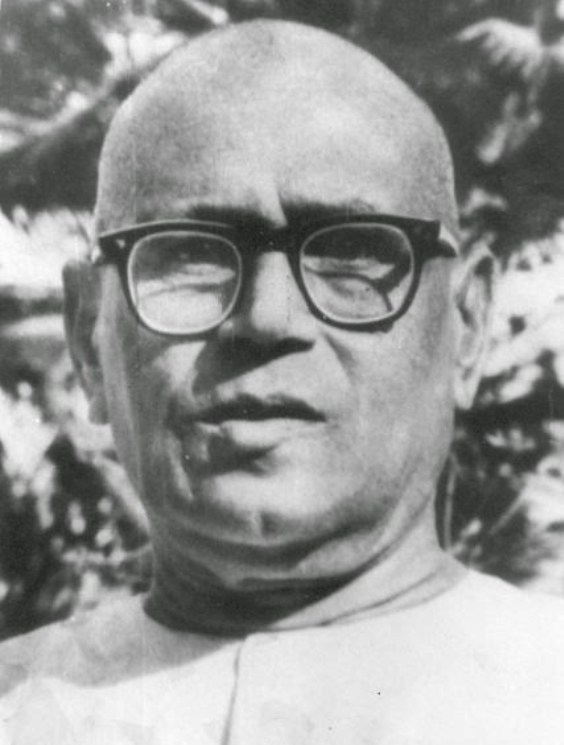
Sarvepalli Narasimham hails from a family that is steeped in Vedic education and very deeply invested in academic excellence. He was no different. Even as he was entering his matriculation, he was already proficient in Sanskrit, Tamil, Telugu and Kannada. Though he had completed all the prerequisites to matriculate, he was unable to take the exams most likely due to financial difficulties. Arcot Mission School noticed his multilingual and cultural talent and sought him to be the teacher for their novitiates around 1896.
Arcot Mission was the key player of Christian Mission activities at that time and these novitiates who were like evangelists in training, needed to learn the local language and customs in order to influence the population and encourage conversion to Christianity. This was a job that brought food to the table, and he did it with utmost sincerity. He not only taught them the language but also guided them in the nuances of the sanatana dharma that he very meticulously followed. He even taught them meditation. So much so that two of the prominent trailblazing evangelists of his time namely Paul Adiseshaiyya and Ida Scudder wanted to adopt Hinduism as their way of life. True to his intuitive belief that spirituality is not limited by religious identity, he forbade them from changing their religion. No irony was lost here, I guess. Further, he used to visit the jail inmates in Central Jail in Vellore and not only gave spiritual counseling but also taught them meditation and initiated them into Rama Taraka mantram. By his democratic view of spirituality and deep conviction in his dharma Sarvepalli was making a significant impact in the people that he was coming across.
Arcot Mission had by now set up Vorheese college and was getting ready to start the Christian Mission hospital. Their commitment to conversion and trying to radically change the cultural identity of the people around very likely ruffled the feathers of some of the native language teachers. Sarvepalli left the mission and joined as a munshi (language teacher) for the police training academy in Vellore. He made peace with the fact that at least he would not be teaching the local language to people who are keen to convert people to a different faith.
Though he looked like he had all the answers, he was also seeking clarity, and his spiritual life was about to leap forward.
Just as Narasimham was employed in the Police Training School as a language teacher, Kavyakantha Ganapati Muni was serving as a Telugu teacher in a local school in Vellore. The two of them met in 1906.
Sarvepalli Narasimham was completely swept off his feet by the sheer brilliance and high ideals of the Muni and took him as his guru right away. Kavya Kanta introduced Bhagavan Ramana Maharshi and his teaching of Atma vichara to him.
The spiritual freedom that the Muni was passionate about intrigued Narasimham and he soon joined the fledgling “Indra Sena” of the Muni. The purpose of “Indra Sena” was to bring about spiritual renaissance in India and unite the country to preserve its cultural heritage.
It was not until 1910 that he was able to make his trip to Tiruvannamalai and meet Bhagavan for the first time in Virupaksha cave. One of the reasons could have been the Plague outbreak that had happened around that time. Madras presidency had implemented excellent isolation and containment strategies that kept the casualties to a minimum. They must have observed some travel restrictions and since he was in active employment with the British serving in a civil body called the Police teaching academy, he would have had to abide by that.
That first meeting in 1910 with Bhagavan in Virupaksha cave was a profound one. It washed away what few doubts he had and convinced him that Bhagavan was the embodiment of the entire Vedas and Upanishads. His surrender was complete. His spiritual quest came to fruition.
He returned to Vellore a changed man. Outwardly the body continued to perform its duty, but his heart was full of devotion and peace. His teaching of language and the spiritual satsangs were gaining steady popularity in the police force as well. His language students were some of the highly placed officers and the Brits used to send a motorcar to pick him up. Despite this rare fanfare afforded to him, he led a very simple life.
On March 18th, 1911, he was asked to present himself as the Telugu teacher for a young British police officer who had recently traveled from England via Bombay. In that very first meeting, the police officer was asking him questions about astrology and later mahatmas, Guru, etc. This was also around the time when Kavyakantha was under police scrutiny for all his nationalistic sentiments and his call for spiritual awakening etc. Since this was a police officer, Sarvepalli Narasimham was extra cautious and avoided giving out much information. However, this young man turned out to be rather special. His experiences and questions were very genuine and the Munshi finally relented. One led to another and Sarvepalli Narasimham introduced the young police officer to Kavya Kanta and then together they all went to meet Bhagavan Ramana Maharshi as well. That police officer was none other than Frank Humphreys, the first documented western devotee of Bhagavan.
Humphreys wrote to Felicia Scatcherd, who was then the editor of the International Psychic Gazette, about the Maharshi and his teachings. These communications later came out as a booklet in 1925. This probably was the first international publication of Bhagavan’s teaching that was already spreading beyond the shores of India by then. Sarvepalli Narasimham had written an introduction to this booklet detailing the initial meetings with his student that finally led to the meeting between Frank Humphreys and Bhagavan.
An extract of this priceless booklet came out as chapters in “Self Realization” the first English biography of Bhagavan by B.V.Narasimha Swami.
Narasimham in his later years would recall that the 1911 meeting that took place between Humphreys and Maharshi made a paradigm shift in him as well.
After the 1911 trip, Sarvepalli Narasimham’s visit frequency to Bhagavan increased steadily. He started translating a lot of the early works of Bhagavan into Telugu. He was the first to translate Bhagavan’s ‘Who am I’ teaching into Telugu.
In 1917 Kavyakantha presented the completed compilation of Ramana Gita in front of Bhagavan. Narasimham, who was present at that time requested Kavyakantha to compose a guru stuthi as an introduction to the text. The muni obliged and wrote the Guru Gitam. Narasimham translated both the Ramana Gita and Guru Gitam into Tamil and Telugu and that was later published in 1923.
Not much is known about his personal life. He was married and he had two daughters. His wife was deeply devoted to Yoga Narasimhar and yearned to have a boy. The couple ended up having a male child. However, he died in his early childhood. Narasimham was already deeply transformed by Bhagavan’s Atma vichara. He took a formal sanyasa in 1927 and was given the name Swami Pranavananda- one who rejoices in the bliss of pranava or the Self.
The inner transformation had taken place a long time ago. This ochre robe was just an external symbol. He had already come to believe that Bhagavan had taken an embodied form just to deliver the rest of mankind. To this effect he even wrote a book in Telugu called Sri Guru Anugraha Avatharamu. Besides this, he had written a few more books in Telugu on Bhagavan and his teaching.
He continued teaching Vedanta and soon had his own ashram in Gudivada. One of his disciples owned a printing press. Swami Pranavananda took it upon himself to spend whatever money he had to print and distribute Bhagavan’s teaching. In those early days of Ramanasramam, he would get a lot of booklets that contained Bhagavan’s teachings printed and donate them to the ashram so that they could be sold at a subsidized rate to devotees.
Since money was hard to come by, he was even more frugal in spending it. Once, Swami Pranavananda came to Tiruvannamalai on a hot summer day to deliver some printed books to the ashram bookstore. Not wanting to spend any money on a horse cart, he chose to carry the load from the railway station and walk to the ashram. By the time he reached the gate, he was suffering from severe heat exhaustion. Bhagavan noted him at the entrance and came up to him and poured water on his legs from his own kamandalu (handheld water pot) and massaged his legs while lovingly chiding him for going to such extreme measures to save money. That scene poignantly depicts both Bhagavan’s love and the devotee’s surpassing devotion and dedication!
Swami Pranavananda was an ardent devotee of Sri Rama. He was well versed in Valmiki Ramayana and used to give discourses on it and would also frequently initiate seekers in Rama Taraka mantram. The following incident must have happened in the 1920s. A few months after Alagammal’s samadhi shrine had been built, some water was seen seeping between stones nearby. Niranjanananda Swami brought it to the attention of Bhagavan who was still living in Skandashram. Bhagavan came down and gently moved some of the stones around using his walking stick and noted it to be a natural spring. The rocks were subsequently cleared and a well was created. It proved to be extremely convenient for both the maintenance of the shrine and for cooking purposes since until then they had to lug around fresh water from the nearby tanks. This well has been variously called as Alagammai theertham, Ramana theertham, Thanga kai (golden hand) theertham etc. We recently found out that Kavya Kanta named it अहं शमन तीर्थम् or the ‘I’ destroying water.
To safely draw water and prevent any accidental fall into the hole in the ground, they had stacked up dry branches and tree trunks around it and set up a pole and pulley to draw up the water. One day the ashramites noted that there was a crow sitting on the perch unmoving for hours. In Kunju Swami’s reminiscences, he recalls noting that crow sitting at the same spot for 3 days. He informed Bhagavan about it in the hall (Old Hall for our reference) and Bhagavan came out and held the bird in his hand and noting that it was moribund, fed a few drops of water from his water pot and enquired about its wellbeing. No sooner had he done that, the bird expired. Bhagavan declared that it must have been a higher being patiently waiting for this contact to happen before letting go of its body. A samadhi was built for the crow, the first of its kind, inside the premises of Sri Ramanasramam. Later that day, Swami Pranavananda came to visit the ashram, and Bhagavan related this story and also mentioned about the due respect that was afforded to the crow. For a moment it looked like Pranavananda was unmoved and then he burst into tears, claiming to Bhagavan why he was narrating this as if this happened for the first time! With his voice trembling with emotion, he said, wasn’t Bhagavan the same Rama who in a previous avatar had liberated Jatayu, the king of eagles in a similar fashion? The people around were moved by the comparison. This is yet another example of how Swami Pranavananda’s view of the world had changed forever. He saw Bhagavan as the singular embodiment of all. This conviction seeped into all that he came in contact with.
Let’s now move to the year 1932. Swami Pranavananda sent his grandson, Hariprasad, to attend Bhagavan’s Jayanthi function. He must have been around 10 yrs old at that time. Swami had given him a clear set of instructions. He was to have Bhagavan’s darshan, eat breakfast in the ashram, and then go on a giripradakshina after delivering a letter to Bhagavan. Hariprasad dutifully had Bhagavan’s darshan, breakfast and was about to leave for the Giri pradakshina completely forgetting about the letter. Bhagavan, however, guessed that he must be carrying a letter and asked about it. Sheepishly, he pulled the letter out of his pocket and gave it to Bhagavan. Bhagavan asked him to have a few more idlis before heading out for the pradakshinam. The letter informed Bhagavan that the Maharaja of Mysore was intending to visit the ashram shortly. Since that visit has been recorded to have happened in 1932, we place this incident in the beginning of that year. Hariprasad remained a lifelong devotee of Bhagavan. He passed away in 1988. His obituary in the Mountain Path journal reads thus - “Mr. Hari Prasad, grandson of the late Swami Pranavananda, found solace in meditating on Arunachala Siva and chanting the divine name till his last breath”.
We all know that the family name ‘Sarvepalli’ that he carried in his poorvashrama name has a ring of fame to it. How Swami Pranavananda contributed to that is an interesting story.
In 1888, Sarvepalli Veerasamy, the elder brother of Sarvepalli Narasimham, had a son. He was named Sarvepalli Radhakrishnan. Like most of the family members, he did his early schooling in his birthplace Tirutani. The family that was deeply invested in academic excellence, noted that Radhakrishnan was not showing any promise. The family moved to Tirupati and there too, the boy was not making any progress. By the time the child was 10 years old, Veerasamy was getting agitated and was worried about the future of this truant son. At this point, Sarvepalli Narasimham who was already employed in Arcot Mission school, convinced his brother to send young Radhakrishnan to stay with him in Vellore and pursue his further education.
So, in 1900, Radhakrishnan came to Vellore at the age of 12. In his autobiography “My search for Truth” Radhakrishnan shines some light on the life changing experiences that took place there. The story goes that Sarvepalli Narasimham initiated Radhakrishnan into Rama taraka mantram and the continuous chanting of that mantram in some way enabled him to reorient to his academic goals. He was living in a house which he described in his book as an “Open University”full of academic stimulation and vibrant discussions. He thrived and matriculated with flying colors. In the book he writes about his uncle playing a pivotal role in influencing his academic and spiritual outlook. In a very humorous yet factual way he writes that his choice of pursuing Philosophy in college was because he had free access to plenty of philosophy books and thereby avoid buying books with the limited financial resources. Sarvepalli Radhakrishnan went on to become an outstanding scholar, extremely popular teacher, the first Vice President and later President of independent India.
A silver tongued orator, he is fondly remembered for his ability to bring out the best in his students and his utterly egalitarian spiritual outlook both of which were meticulously molded by his uncle Sarvepalli Narasimham.
Sarvepalli Radhakrishnan also was deeply devoted to Bhagavan and had made at least two trips with his family to Sri Ramanasramam. He wrote the foreword to Arthur Osborne’s book “Ramana Maharshi and the Path of Self- knowledge” in 1954.
Swami Pranavanda continued to visit the ashram from Gudivada.
The last recorded visit happened about a fortnight before Bhagavan’s Mahanirvana.
Like so many other devotees, Swami Pranavananda had come to pay his respects to Bhagavan. Swami Niranjanananda, knowing that Bhagavan treats Pranavananda with great felicity requested him to suggest to Bhagavan about a new doctor sent by the then President of India, Babu Rajendra Prasad. Swami Pranavananda obliged and put forth the request. Bhagavan looked at him intently and then said “Does one preserve the leaf plate after eating the food served on it”?
He understood the import of what Bhagavan said and walked away making peace with it.
Swami Pranavananda had much more to contribute to the world. What happened in the next few decades will be seen next.
Swami Pranavananda flourished as a prominent teacher of Vedanta at Gudivada ashram. In the 50’s and 60’s he was among the strongest proponents of the Sanathana Dharma and gave numerous discourses all over India. In 1961 a young seeker by the name Natarajan was sent to Gudivada by Swami Chinmayananda. Natarajan, a disciple of Chinmayananda was an ardent student of Vedanta but was conflicted with certain aspects of Vedic study and was stalling in his progress. Swami Chinmayananda noted that his best option was to be tutored by Swami Pranavananda. Natarajan stayed with him at Gudivada for a few months in 1961. Swami Pranavananda helped Natarajan learn that Vedanta is a Pramana (a means of knowledge) to know the truth of Self.
A year later, Natarajan was given formal sanyasa by Swami Chinmayananda and became known as Swami Dayananda.
In his own words Swami Dayananda later stated - “I saw Swami Pranavananda giving direct knowledge to the people he was teaching. This resolved all my conflicts. My problems with Vedanta had been my mistaken notion that it was a system”.
The two of them remained lifelong friends.
When Chinmaya mission conducted their very first Gnana Yagna symposium on 16 October 1960 Swami Pranavananda was the first keynote speaker. In that address he described the ritualistic act of making offerings in a sacrificial fire to please gods and went on to say that in the Gnana yagna the knowledge is thrown in to please and feed the seekers who take the place of the gods. He concluded his speech with this statement- “Like the Om flag flying high in each yagna, this yagna’s purpose is to hoist Self-knowledge in the heart of the audience”.
This gives us an idea of the eloquence and clarity of this dear devotee of Bhagavan.
Towards the end of his life, due to failing health, Swami Pranavananda moved back to Vellore. One day he asked his grandson Hari Prasad to call his dear friend Kuzhumani Narayana Sastri to visit him.
Kuzhumani Narayana Sastri, yet another devotee of Bhagavan who famously wrote the first biography of Sri Seshadri Swamigal was a dear friend of Swami Pranavananda. Both were erudite scholars steeped in Valmiki Ramayana. On May 15th, 1969, Kuzhumani Narayana Sastri was by his bedside. Swami Pranavananda asked him to chant Sri Rudram and with the words “Hari Om”on his lips, he merged at the feet of Bhagavan.
His body was afforded the respect due to a sanyasi and a samadhi was erected by the banks of the river Palaar in Vellore.
Swami Dayananda wrote a moving tribute in the June 1969 issue of 'Tapovan Prasad'. In that, he stated that he had met the Swami two months prior to his demise. Though laid up in bed, he was clear in his thinking and was happy as usual. Swami Dayananda requested him to give a message to the seekers and Swami Pranavananda dictated immediately in Telugu. The following are some excerpts from the English translation of that.
“Freedom is the nature of the Self; the I and the Self are identical with Brahman which is non-dual. Karma and Upasana are pursued by the people only because of their identification with the body, dehatma buddhi. The body is not the Self and therefore this pursuit cannot lead to moksa. Suppose a person by name Rama is asleep, if he is called by someone, “Rama!”, he wakes up. Similarly with profound words of Sruti, if the master reveals to the student the identity of the Self with the Absolute, the student wakes up to discover his identity with Brahman.
The Swami dictated all this in his usual clarity of expression. He was clear that there was no death for a sadhu, nor do I feel he ever died.”
Humble pranams to this remarkable devotee’s life and legacy.

REFERENCES:
- Call Divine – May 1953
- Cherished Memories
- Chinmaya Mission
- Epistles of Light
- Eternal Ocean of Grace – Book 4
- Maha Tapasvi
- Mountain Path – Aradhana 2000
- Letters from Sri Ramanasramam
- Sri Ramana Gita
- tattvavidya.blogspot